
Understanding Endotoxins and LPS: Why Peptide Purity Matters for Your Health
When you’re committed to optimizing your health with peptide therapies, you want assurance that what you’re using is not only effective—but safe. One critical factor that often gets overlooked in peptide discussions is the presence of endotoxins and lipopolysaccharides (LPS). Understanding what these are, how they affect your body, and how to identify contamination can be the difference between a successful wellness journey and an unexpected inflammatory response.
Let’s break down this important topic in a way that empowers you to make informed decisions about the peptides you choose.
What Are Endotoxins and LPS? The Basics

Endotoxins are toxic components found in the outer cell membrane of gram-negative bacteria. The primary culprit is lipopolysaccharide (LPS)—a complex molecule consisting of three parts: a lipid anchor, a core polysaccharide, and an outer chain. Think of LPS as bacterial armor that protects the bacterial cell.
When gram-negative bacteria die or break apart—whether in lab equipment, water supplies, or during the manufacturing process—their LPS is released into the surrounding environment. This is where contamination risk enters the picture for peptide products.
The concerning part? Even trace amounts of LPS can trigger a powerful immune response in the human body, making endotoxin testing and control absolutely essential for any injectable peptide product.
How Endotoxins Affect Your Body: The Immune System Response
Your immune system is incredibly sensitive to LPS—almost like a highly tuned alarm system. Here’s what happens when LPS enters your body:
The TLR4 Pathway: How LPS Triggers Inflammation

When LPS enters your bloodstream, it binds to a protein called LPS-binding protein (LBP), which then transfers it to immune cell receptors known as CD14 and Toll-like receptor 4 (TLR4). This handoff activates your innate immune system and triggers intracellular signaling cascades, particularly the NF-κB and MAPK pathways—the same pathways your body uses to mount a defense against bacterial infection.
Once activated, these pathways signal your immune cells to release pro-inflammatory cytokines including TNF-α, IL-1β, and IL-6. In essence, your body perceives the LPS as a genuine bacterial threat and mounts a full inflammatory response—even though the bacteria itself isn’t present.
Symptoms of Endotoxin Exposure
If you’ve ever injected a contaminated product, you may have experienced:
- Fever or chills
- Headaches or body aches
- Malaise or general unwellness
- Flushing or temporary hypotension in severe cases
These reactions can range from mild to severe depending on the contamination level. At high doses, LPS can even trigger systemic inflammatory responses that affect multiple organ systems—which is precisely why pharmaceutical-grade manufacturing standards include rigorous endotoxin testing.
Why Endotoxin Control Matters for Peptides
Unlike oral medications, peptides are typically administered via injection, which means they bypass your body’s natural protective barriers (like your digestive system). This direct route to your bloodstream makes contamination control especially critical.
Popular peptides like semaglutide, BPC-157, and TB-500 are produced through various manufacturing methods—bacterial fermentation, chemical synthesis, or recombinant expression—all of which present potential contamination opportunities if quality controls aren’t rigorous.
Pharmaceutical-Grade vs. Research-Grade Peptides
Pharmaceutical-grade products (like FDA-approved semaglutide) are manufactured under Good Manufacturing Practice (GMP) standards with mandatory endotoxin testing, strict specification limits, and regulatory oversight. Contamination at clinically relevant levels is extremely rare.
Research-grade peptides (like many BPC-157 and TB-500 products available through peptide suppliers) operate in less regulated environments. Without equivalent quality controls, endotoxin testing, and specifications, contamination risk is substantially higher. This is why due diligence matters.
Recognizing Quality: What to Look for in Testing
When evaluating any peptide product, the gold standard for endotoxin assessment is the Bacterial Endotoxin Test (BET), also called the Limulus Amebocyte Lysate (LAL) test. This sensitive assay can detect LPS at concentrations as low as 0.5 EU/mL (Endotoxin Units per milliliter).
Reputable peptide manufacturers will provide a Certificate of Analysis (COA) that includes:
- Endotoxin testing results with specific numerical limits
- Sterility testing (bacterial and fungal culture)
- Purity and identity confirmation (HPLC, mass spectrometry)
- Specific testing date and expiration information
When reviewing a COA, look for endotoxin limits that meet or exceed pharmaceutical standards—typically <10 EU/vial or lower for injectable products.
Maintaining Your Peptide Quality: Storage and Consistency
Even with a clean product, proper storage and consistent usage protocols matter. Peptides are sensitive to temperature fluctuations, and repeated exposure to non-ideal conditions can increase degradation risk.
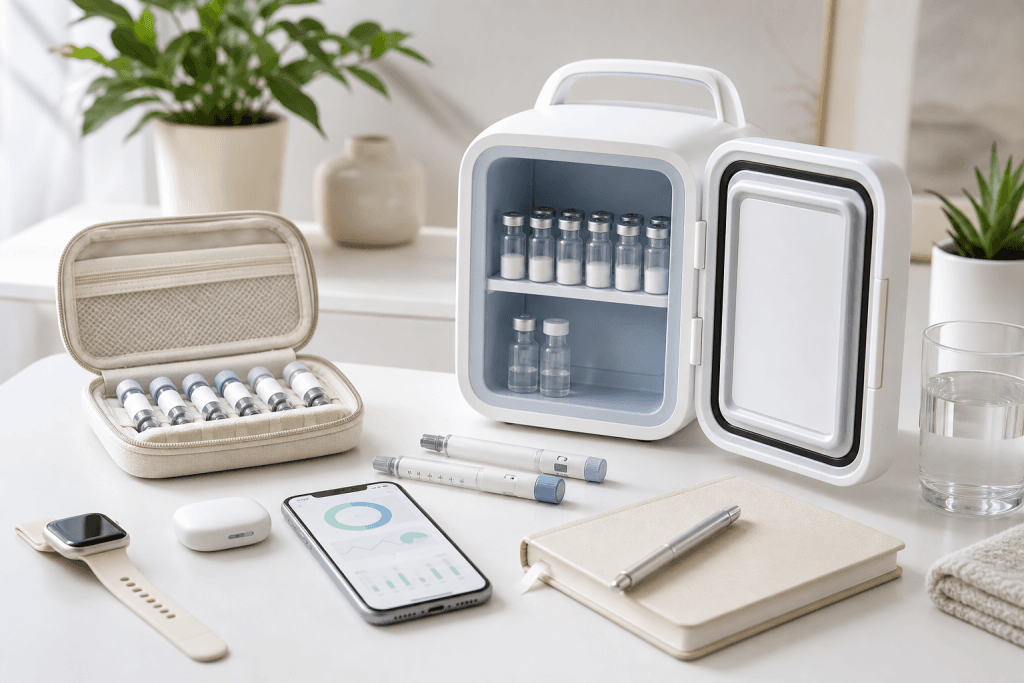
For those traveling with peptides or maintaining a consistent routine at home, the Ultimate Peptide Travel Cooler Case provides reliable temperature control whether you’re commuting to the gym or traveling internationally. Maintaining proper storage conditions helps preserve peptide integrity and reduces any contamination risk from environmental exposure.
Beyond storage, consistency in your protocol is crucial. Using the ShotLog app can help you maintain adherence with smart reminders and automated tracking. The app’s Biograph feature even visualizes how peptide levels fluctuate in your body over time, giving you concrete insight into your therapy’s trajectory. This data consistency becomes especially valuable if you ever need to report adverse events or discuss your protocol with a healthcare provider.
Who Should Prioritize Endotoxin Testing Knowledge?
Anyone using injectable peptides should understand endotoxin risks, particularly:
- Athletes and fitness enthusiasts using tissue-repair peptides like BPC-157 or TB-500
- Weight management seekers using GLP-1 peptides
- Biohackers and longevity enthusiasts exploring multiple peptide stacks
- Anyone with compromised immunity who would be especially vulnerable to inflammatory responses
If you fall into any of these categories, requesting and reviewing COAs should be part of your standard due diligence process.
Quality Organization Supports Quality Outcomes
Part of maintaining confidence in your peptide routine is keeping your products organized and tracked. Using Peptide Vial Cases helps you protect your supply and maintain visual inventory of what you have on hand. When combined with the vial tracking features in the ShotLog app, you gain a complete picture of your remaining supply and can plan reordering with confidence.
For precision administration, having quality tools like the NEST Professional Research Pen Injector ensures consistent, comfortable delivery. When your equipment is reliable and your storage is proper, you’ve eliminated variables that could compromise your results.
The Bottom Line: Knowledge Is Protection
Endotoxins and LPS contamination represent a real concern in the peptide world, but it’s not a reason to avoid peptides—it’s a reason to be selective. By understanding what endotoxins are, how they affect your body, and what quality markers to look for, you empower yourself to choose products from manufacturers that take safety seriously.
Always request Certificates of Analysis. Always look for endotoxin testing results. And always maintain proper storage and tracking of your peptides. These practices, combined with professional healthcare guidance, form the foundation of a safe and effective peptide protocol.
Important Disclaimer
This article is educational and informational only and should not be considered medical advice. Peptide therapies carry inherent risks and should only be used under the guidance of a qualified healthcare provider. Before starting any peptide protocol, consult with a medical professional who can evaluate your individual health status, medical history, and potential drug interactions. Always request Certificates of Analysis from your peptide supplier and discuss quality and safety concerns with your healthcare provider. The information provided here is based on current research and scientific understanding but does not constitute a complete medical evaluation.
Related Products from ShotLog
Optimize your peptide experience with professional-grade tools and tracking:
- NEST Professional Research Pen Injector ($44.99) — Precision injection delivery for consistent, comfortable administration
- Reusable Peptide Pen ($20.99) — Eco-friendly, reliable injection solution for regular users
- Ultimate Peptide Travel Cooler Case ($29.99) — Maintain proper storage temperature whether at home or traveling
- Peptide Vial Cases ($4.98-$9.98) — Protect and organize your supply with professional storage solutions
- Universal Peptide Pen Needles ($9.49) — High-quality needles for reliable, comfortable injections
- ShotLog App — Track your peptide protocol with smart reminders, progress monitoring, 14-point body measurements, vial tracking, and Biograph visualization of peptide levels in your body