
The GLOW Stack Explained: How Three Peptides Work Together for Tissue Repair and Regeneration
When it comes to peptide protocols, more isn’t always better—but sometimes, the right combination truly is more powerful than the sum of its parts.
The concept of “1+1+1 = GLOW” represents a fascinating approach to tissue regeneration that’s gaining attention among athletes, fitness enthusiasts, and anyone serious about optimizing their body’s natural repair systems. This stack combines three distinct peptides—BPC-157, TB-500, and GHK-Cu—each targeting different healing pathways in your body.
But why stack them together? The answer lies in understanding how they complement each other at the cellular level. Let’s break down the science.
Understanding the Individual Peptides
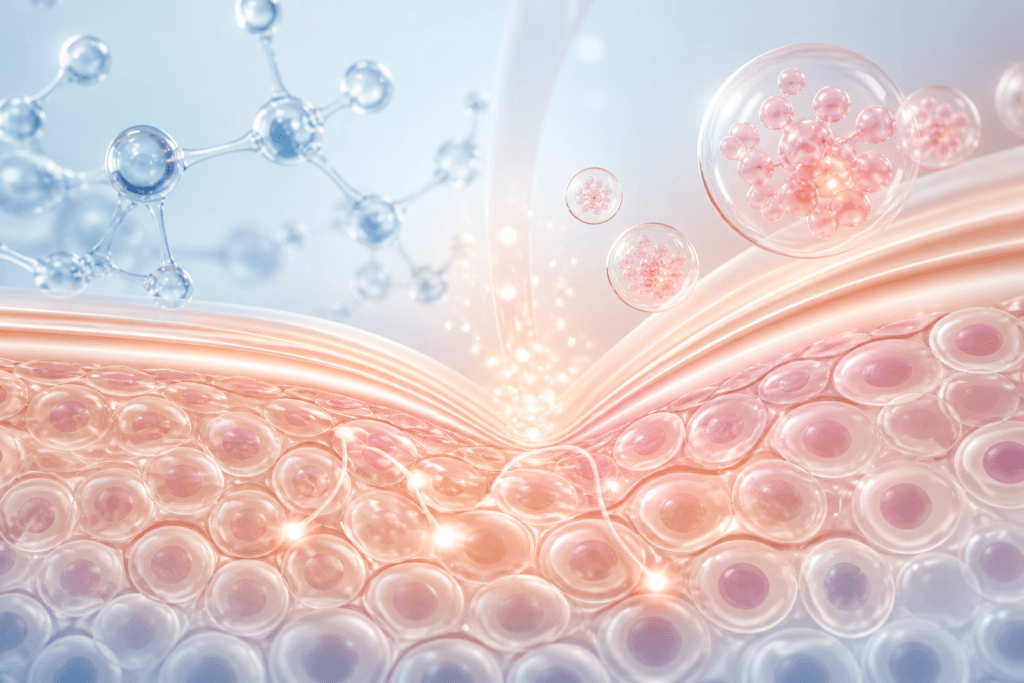
BPC-157: The Project Manager of Repair
BPC-157 is a 15-amino-acid peptide derived from gastric juice that functions like the foreman on a construction site. Research shows it coordinates multiple repair pathways simultaneously, making it particularly valuable for tendon, ligament, and muscle healing.
At the cellular level, BPC-157 works by:
- Enhancing fibroblast activity – These cells are responsible for producing collagen and maintaining tissue structure. BPC-157 increases their proliferation and migration to injured areas.
- Promoting angiogenesis – It stimulates the formation of new blood vessels, improving oxygen and nutrient delivery to damaged tissue. Better blood flow means faster healing.
- Supporting collagen organization – Rather than just increasing collagen production, BPC-157 helps organize it properly, creating stronger, more resilient tissue.
- Protecting against inflammatory damage – Preclinical research suggests it can counteract certain types of tissue damage and inflammatory responses.
Animal studies consistently show that BPC-157 accelerates recovery from tendon transection, ligament injury, and muscle damage—making it particularly attractive for athletes and anyone dealing with soft tissue injuries.
TB-500: The Cell Migration Specialist
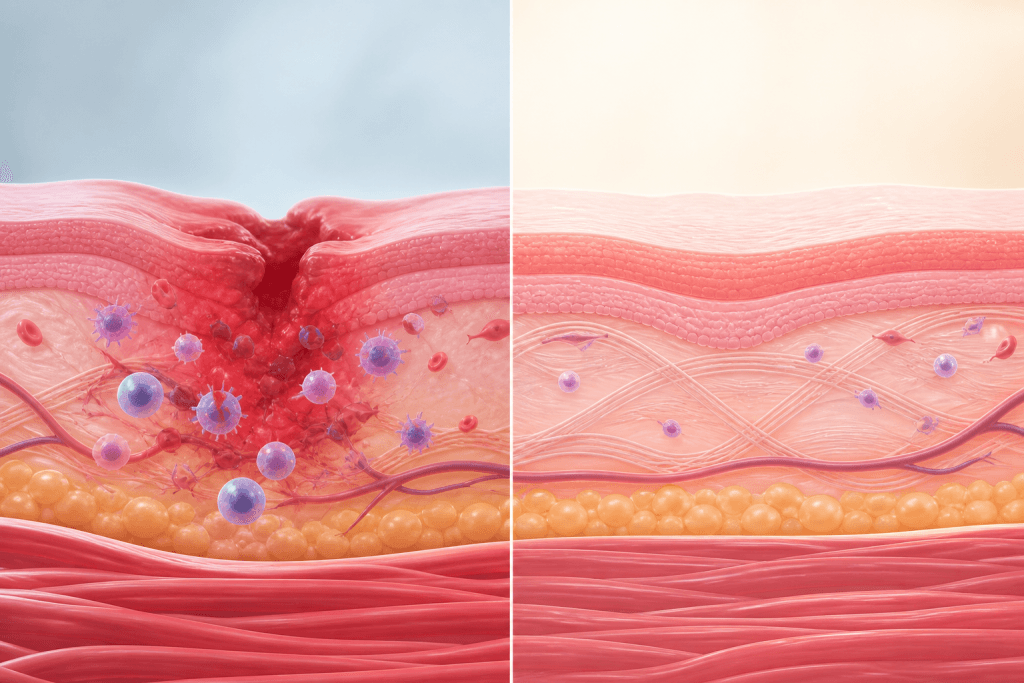
TB-500 is a synthetic peptide fragment based on thymosin beta-4 (Tβ4), a naturally occurring compound that plays a crucial role in cellular movement and organization. Think of TB-500 as the carpenter building the framework.
TB-500 facilitates healing through:
- Actin binding and cell migration – By binding to G-actin, TB-500 enables fibroblasts, endothelial cells, and keratinocytes to move rapidly into injured areas, accelerating tissue closure.
- Systemic angiogenesis – It promotes new blood vessel formation throughout the body, supporting healing not just locally but systemically.
- Anti-fibrotic effects – TB-500 helps reduce scar tissue formation, leading to more organized, functional tissue repair rather than fibrous buildup.
- Multi-tissue repair – Preclinical research spanning over 1,000 studies demonstrates TB-500’s effectiveness across skin, muscle, tendon, and even cardiac tissue.
The beauty of TB-500 is its systemic nature—it doesn’t just work locally but can support healing throughout your entire body by promoting cell migration and tissue regeneration.
GHK-Cu: The Aesthetic and Collagen Specialist
GHK-Cu is a copper-binding tripeptide that naturally occurs in human plasma. While BPC-157 and TB-500 handle structural repair, GHK-Cu focuses on collagen remodeling, skin quality, and aesthetic outcomes—making it the interior designer of the stack.
GHK-Cu works by:
- Stimulating collagen synthesis – It upregulates genes responsible for collagen and elastin production, improving skin firmness, texture, and elasticity.
- Supporting ECM remodeling – Beyond just making more collagen, GHK-Cu helps organize the extracellular matrix for better tissue quality and appearance.
- Enhancing microcirculation – The copper complex promotes localized blood flow in skin and connective tissue, supporting both healing and cosmetic improvement.
- Providing antioxidant protection – GHK-Cu exhibits antioxidant properties that protect healing tissue from oxidative stress.
- Promoting hair and follicle health – Research indicates GHK-Cu can enhance hair growth and improve dermal thickness.
Because GHK-Cu specifically targets collagen and skin quality, it complements the structural repair work of BPC-157 and TB-500, creating a comprehensive regeneration protocol.
Why Stack Them Together? The Synergy Effect
Each peptide operates through different biological pathways. When combined, they create a multi-layered approach to tissue repair that’s more comprehensive than any single peptide alone.
Here’s how the synergy works:
Stage 1: Vascular Foundation – BPC-157 initiates angiogenesis and improves microcirculation, while TB-500 supports systemic blood vessel formation. Together, they ensure adequate oxygen and nutrient delivery to healing tissue.
Stage 2: Cellular Migration and Structure – TB-500’s cell-migration effects work in concert with BPC-157’s fibroblast enhancement to rapidly populate injured areas with repair cells and establish new tissue architecture.
Stage 3: Quality and Regeneration – While the first two peptides handle speed and structure, GHK-Cu refines the outcome by promoting proper collagen organization, reducing fibrosis, and supporting cosmetic improvements like skin quality and hair health.
Research suggests this multi-pathway approach addresses common limitations of single-peptide protocols: faster results, more organized tissue regeneration, and better aesthetic outcomes.
Who Benefits from the GLOW Stack?

The GLOW stack appeals to several populations:
- Athletes in recovery – Anyone healing from acute injuries or managing chronic overuse damage
- Weekend warriors – Active individuals looking to bounce back faster from training stress
- High-achievers under physical stress – Professionals and executives dealing with the cumulative wear and tear of demanding lifestyles
- Aesthetic-focused individuals – Those prioritizing skin quality, hair health, and anti-aging alongside structural repair
- Recovery-conscious users – Anyone serious about optimizing their body’s natural regeneration capacity
The combination is particularly valuable for people who need both functional repair (tendon, ligament, muscle) and cosmetic improvement (skin, hair) simultaneously.
Tracking Your Protocol: The Importance of Consistency
When using a multi-peptide stack, consistency becomes crucial. Your body needs regular, predictable exposure to these compounds to mount an effective healing response. Many users find success by utilizing tools like the ShotLog app, which provides smart reminders and helps maintain adherence to your protocol schedule. The app’s 14-point body measurement tracking and progress photo features allow you to document changes across skin texture, muscle definition, and overall tissue quality—exactly the metrics the GLOW stack targets.
Beyond adherence, ShotLog’s Biograph feature visualizes how peptide levels fluctuate in your body over time, giving you insight into your recovery window and helping optimize timing for maximum effect.
Storage and On-the-Go Management
Proper peptide storage is essential for maintaining efficacy. For those who travel frequently or maintain an active lifestyle, the Ultimate Peptide Travel Cooler Case ensures your peptides remain at optimal temperature during transport. Paired with organized vial storage, you can keep your GLOW stack protected and accessible wherever your recovery journey takes you.
Clinical Evidence and What Research Shows
It’s important to acknowledge that while preclinical research is extensive and promising, human clinical trials specifically testing the “GLOW stack” combination are limited. However, the existing evidence for individual components is compelling:
- BPC-157 – Extensive animal studies demonstrate consistent benefits for tendon, ligament, muscle, and bone healing. A systematic review notes preliminary human data, though robust clinical trials are still needed.
- TB-500 – Over 1,000 preclinical studies across multiple tissue types show positive repair outcomes. While specific human trials remain limited, therapeutic formulations based on related compounds have advanced to Phase 3 trials.
- GHK-Cu – The most established cosmetically, with multiple small human studies supporting benefits for skin rejuvenation, wound healing, and hair growth.
The theoretical synergy makes biological sense—different repair pathways working together should theoretically enhance outcomes. However, users should approach this stack with realistic expectations based on current evidence levels.
Safety Considerations and Important Cautions
While the individual peptides show favorable safety profiles in preclinical research, several important points warrant consideration:
- These are research compounds without FDA approval for human use
- Individual responses vary based on genetics, lifestyle, diet, and overall health status
- Quality and purity of peptide sources vary significantly—source matters
- Proper storage and handling are essential for maintaining safety and efficacy
- Combining multiple peptides increases complexity and requires informed decision-making
This information is educational only and should not be considered medical advice. Before using any peptide protocol, consult with a qualified healthcare provider who can assess your individual health status, medical history, and goals. Your provider can help you determine whether this approach is appropriate for you and monitor your progress.
The Bottom Line
The GLOW stack represents an intriguing multi-pathway approach to tissue regeneration and recovery. By combining BPC-157’s repair coordination, TB-500’s cell migration support, and GHK-Cu’s collagen enhancement, users theoretically access a more comprehensive healing protocol than single-peptide approaches offer.
However, success depends on several factors: quality peptides from reputable sources, consistency with your protocol, proper storage and handling, and realistic expectations based on current evidence. Whether you’re an athlete recovering from injury, a fitness enthusiast optimizing recovery, or someone focused on aesthetic improvements alongside functional repair, understanding how each peptide works and how they complement each other empowers you to make informed decisions about your health journey.
The future of peptide research will likely include more human trials specifically testing combination protocols, which should provide clearer guidance on whether 1+1+1 truly equals more than 3.
Related Products from ShotLog
Whether you’re beginning a peptide protocol or optimizing an existing one, having the right tools supports consistency and success:
- ShotLog App – Track your protocol with smart reminders, visualize peptide levels with Biograph, and monitor 14-point body measurements to document your transformation.
- Reusable Peptide Pen ($20.99) – A durable, professional-quality delivery system for consistent administration.
- Universal Peptide Pen Needles ($9.49) – Reliable, sterile needles compatible with standard pen systems.
- Ultimate Peptide Travel Cooler Case ($29.99) – Keep your peptides at optimal temperature during travel or storage.
- Peptide Vial Cases ($4.98-$9.98) – Organize and protect your vials with professional-grade storage solutions.