
Beyond Appetite Suppression: How GLP-1 Agonists Protect and Preserve Pancreatic Function
The conversation around GLP-1 receptor agonists typically centers on one thing: weight loss. And while the numbers are certainly impressive—tirzepatide users losing over 20% of body weight compared to 13.7% for semaglutide users—this narrative misses something crucial about what these medications actually do inside your body.
GLP-1 agonists like semaglutide and tirzepatide aren’t just appetite suppressors. They’re pancreatic protectors. Understanding this distinction could fundamentally change how you think about metabolic health and longevity.
The Pancreas Under Stress: A Silent Problem
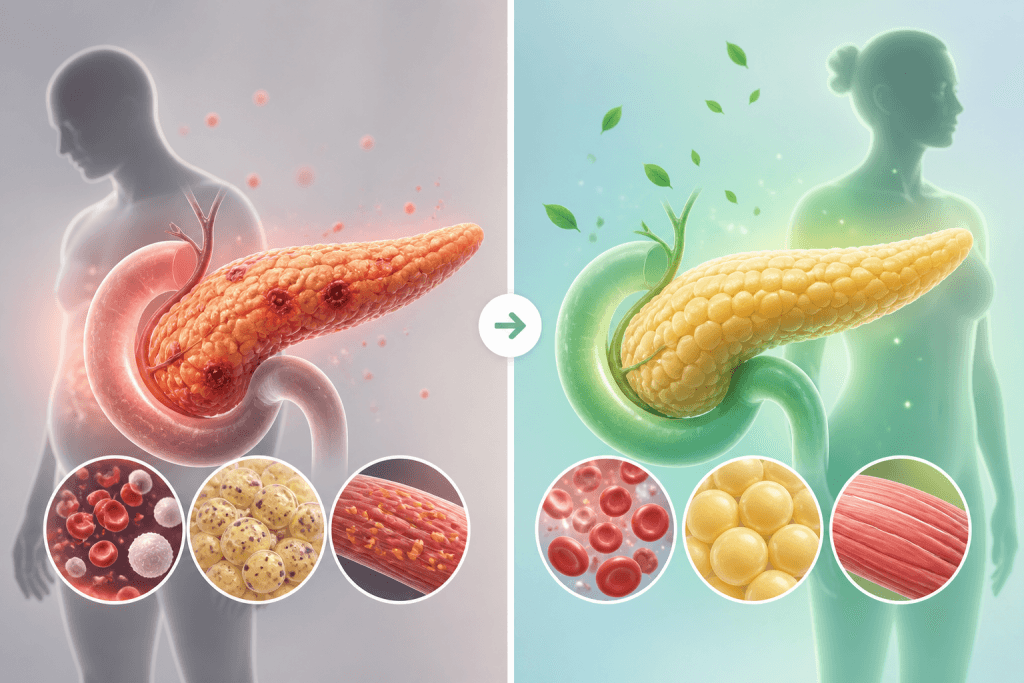
Before diving into solutions, let’s talk about the problem your pancreas faces.
Your pancreas is the hardworking organ responsible for producing insulin, the hormone that regulates blood sugar. In modern life, with processed foods, sedentary habits, and chronic metabolic stress, pancreatic beta cells—the cells that produce insulin—are constantly under siege.
Over time, this relentless demand leads to beta-cell exhaustion. These cells accumulate damage, produce less insulin, and gradually lose their ability to respond to glucose spikes. This isn’t just about developing type 2 diabetes; it’s about the gradual aging and functional decline of an organ system that’s fundamental to your health.
The problem is that most weight-loss medications only mask the symptom—they suppress appetite—without addressing the underlying pancreatic dysfunction. But GLP-1 agonists work differently.
How GLP-1 Agonists Work: A Multi-System Approach
GLP-1 (glucagon-like peptide-1) is a hormone naturally produced in your gut when you eat. GLP-1 receptor agonists are synthetic versions that mimic this hormone’s effects—but amplified.
When you use a GLP-1 agonist, it binds to GLP-1 receptors located throughout your body: in your pancreas, brain, gut, and other tissues. This triggers a cascade of beneficial effects:
Enhanced Beta-Cell Insulin Secretion
Unlike insulin itself, which works the same way regardless of blood sugar levels, GLP-1 agonists work in a glucose-dependent manner. This means they only enhance insulin secretion when your blood sugar is elevated. When glucose levels are normal or low, they don’t force your pancreas to produce extra insulin. This elegant mechanism reduces the risk of dangerous low blood sugar episodes while allowing your beta cells to work smarter, not harder.
Reduced Glucagon Release

Your pancreas produces glucagon to raise blood sugar when it dips too low. But in people with metabolic dysfunction, glucagon regulation goes haywire, contributing to chronically elevated blood sugar. GLP-1 agonists suppress inappropriate glucagon release, helping restore normal blood sugar dynamics.
Slowed Gastric Emptying
By slowing how quickly food leaves your stomach and enters your bloodstream, GLP-1 agonists flatten post-meal glucose spikes. Smaller spikes mean less stress on beta cells and more stable blood sugar throughout the day. This seemingly simple effect has profound implications for pancreatic longevity.
Brain-Centered Appetite Regulation
GLP-1 receptors in the hypothalamus—your brain’s metabolic control center—trigger satiety signals. You feel fuller longer, eat less, and naturally reduce calorie intake without the deprivation of restrictive dieting. This supports weight loss, which itself reduces metabolic stress on the pancreas.
The Pancreatic Protection Effect: Beyond Blood Sugar Control
Here’s where things get interesting: research shows that GLP-1 agonists do more than just improve glucose control. They actively protect pancreatic beta cells from damage.
Beta-Cell Survival and Reduced Apoptosis

Chronic metabolic stress triggers beta-cell death (apoptosis). GLP-1 agonists reduce this cellular suicide mechanism, allowing your beta cells to survive longer. More importantly, chronic exposure to GLP-1 agonists may actually promote modest beta-cell proliferation—meaning your pancreas can generate new, healthy beta cells to replace damaged ones.
Anti-Inflammatory Effects
GLP-1 receptors are widely distributed across pancreatic and other tissues, and activation of these receptors reduces neuroinflammation and systemic inflammation. Chronic inflammation is a primary driver of pancreatic aging and dysfunction. By lowering inflammatory markers, GLP-1 agonists create an environment where beta cells can thrive.
Improved Metabolic Environment
Through weight loss and improved insulin sensitivity, GLP-1 agonists reduce the twin stressors of “glucotoxicity” (high blood sugar damage) and “lipotoxicity” (fat-induced metabolic stress). Your pancreas no longer operates in a state of chronic metabolic crisis.
Tirzepatide: A Dual Approach to Pancreatic Protection
If semaglutide is protective, tirzepatide is exponentially more so. As a dual GLP-1/GIP receptor agonist, tirzepatide activates two separate metabolic pathways simultaneously.
GIP (glucose-dependent insulinotropic polypeptide) is another gut hormone that also enhances glucose-dependent insulin secretion. When you combine GIP receptor activation with GLP-1 receptor activation, the effects amplify dramatically:
- Superior glycemic control—tirzepatide achieves greater HbA1c reductions than GLP-1 monotherapy
- Greater weight loss—substantially larger body weight reductions in clinical trials
- Enhanced beta-cell function—dual agonism improves insulin sensitivity more effectively
- Direct pancreatic protection—in animal models of pancreatic injury, tirzepatide reduced pancreatic necrosis, oxidative stress, and inflammatory markers while increasing protective anti-inflammatory cytokines
This research suggests that tirzepatide may offer enhanced protection to pancreatic tissue itself, not just improved beta-cell function.
Tracking Your Progress: Why Consistency Matters
The benefits of GLP-1 agonists aren’t one-time events—they’re cumulative. Your pancreas heals and functions better over time with consistent use and proper metabolic management.
This is where smart tracking becomes invaluable. Tools like the ShotLog app help you maintain consistency with smart reminders, track your vial supply, and monitor your progress through 14-point body measurements and progress photography. The app’s Biograph feature even visualizes how peptide and medication levels fluctuate in your body over time—giving you insight into how your regimen is working at a molecular level. By maintaining adherence and tracking measurable progress, you can ensure you’re getting maximum benefit from your therapy.
For those managing multiple peptides or medications, organizing your supplies with proper peptide vial cases helps maintain an efficient routine and ensures nothing gets lost or damaged. Small organizational systems often make the difference between consistent use and inconsistent progress.
A Word About “Reversal” and “Rejuvenation”
You may have heard claims that certain peptides can “reverse age” or “rejuvenate” the pancreas. It’s important to be precise with language here.
GLP-1 agonists—even the powerful dual agonists like tirzepatide—don’t magically erase years of pancreatic damage or turn an old pancreas into a young one. What they do is remarkable but more modest: they preserve remaining function, prevent further decline, and allow your pancreas to operate closer to its optimal state.
For someone with metabolic dysfunction, this is genuinely transformative. Your beta cells aren’t damaged beyond repair—they’re stressed and exhausted. GLP-1 agonists remove the stressor (high blood sugar, chronic inflammation, metabolic overload) and allow your pancreas to recover and function at a higher level. Is that “younger”? In practical terms, yes. But it’s more accurate to call it “restored” or “preserved” function.
Who Benefits Most From GLP-1 Agonists?
GLP-1 agonists are particularly beneficial for:
- Type 2 diabetes patients seeking better glycemic control and reduced medication burden
- People with prediabetes wanting to prevent progression to diabetes
- Metabolically obese individuals with insulin resistance despite normal weight
- Those with metabolic syndrome characterized by high blood pressure, abnormal lipids, and abdominal obesity
- Weight management seekers with metabolic dysfunction
- Individuals interested in metabolic longevity and protecting pancreatic function as part of a broader healthspan strategy
If you fall into any of these categories and are considering GLP-1 therapy, tracking your response becomes even more important. Regular monitoring of weight, blood sugar, energy levels, and subjective wellbeing helps optimize your approach.
Practical Considerations for GLP-1 Users
If you’re using or considering GLP-1 agonists, a few practical points:
Consistency is key. The protective benefits build over time with regular, adherent use. Missing doses or irregular use limits the pancreatic protection you receive.
Storage matters. GLP-1 agonists require proper refrigeration. If you travel frequently, tools like the Ultimate Peptide Travel Cooler Case ensure your medications stay at proper temperatures, maintaining their potency and ensuring you never miss a dose due to storage issues.
Nutrition optimization enhances results. GLP-1 agonists work best when combined with improved dietary choices. The ShotLog app includes a 1M+ food database for nutrition tracking, helping you maximize the metabolic benefits of your therapy.
Progress photos and measurements track transformation. Beyond scale weight, measuring your waist, hips, chest, and other body metrics provides a fuller picture of body composition improvement. ShotLog’s 14-point measurement system captures these changes, allowing you to see exactly where you’re losing fat and building lean tissue.
The Bigger Picture: Pancreatic Health as Longevity Strategy
Your pancreas is far more than just a blood-sugar regulator. It’s central to how your body ages. Pancreatic dysfunction accelerates aging across multiple systems: increased inflammation, impaired autophagy (cellular cleanup), oxidative stress accumulation, and mitochondrial dysfunction all follow metabolic dysregulation.
By using GLP-1 agonists to restore pancreatic function, you’re not just improving your diabetes risk or weight—you’re potentially extending your healthspan. You’re reducing chronic inflammation, protecting your cells from oxidative damage, and maintaining metabolic flexibility as you age.
This is the real story of GLP-1 agonists: they’re not just weight-loss drugs. They’re pancreatic protectors that allow your body to function more youthfully by restoring the metabolic foundation of health.
Important Disclaimer
This article is for educational purposes only and should not be considered medical advice. GLP-1 receptor agonists are prescription medications with potential side effects and contraindications. The mechanisms described here are based on clinical research, but individual responses vary significantly.
Before starting, changing, or stopping any GLP-1 agonist therapy, consult with a qualified healthcare provider who can assess your individual health status, medical history, and metabolic markers. This is especially important if you have a personal or family history of thyroid cancer, pancreatitis, or other endocrine conditions.
Your healthcare provider can help determine whether GLP-1 therapy is appropriate for you and monitor your progress to ensure optimal results and safety.
Related Products from ShotLog
Whether you’re starting GLP-1 therapy or optimizing your existing regimen, these ShotLog products support consistency and tracking:
- Reusable Peptide Pen ($20.99) — A reliable, user-friendly injection pen for peptide and GLP-1 agonist delivery
- Universal Peptide Pen Needles ($9.49) — High-quality needles ensuring smooth, comfortable injections
- Ultimate Peptide Travel Cooler Case ($29.99) — Maintains proper storage temperature during travel, ensuring medication potency
- Peptide Vial Cases ($4.98–$9.98) — Organize and protect your vials, reducing risk of damage or loss
- ShotLog App — Track dosing schedules, monitor progress with body measurements and photos, visualize peptide levels with Biograph, and maintain consistency with smart reminders